

The sixteen BT Telephone Exchanges (and thirteen former) in the Wolverhampton (01902) Telephone Area
Up until around 1980 the inner (core) exchanges had the STD code 0902, whilst the outer (ring of) exchanges had the STD code 0907.
Albrighton ATE
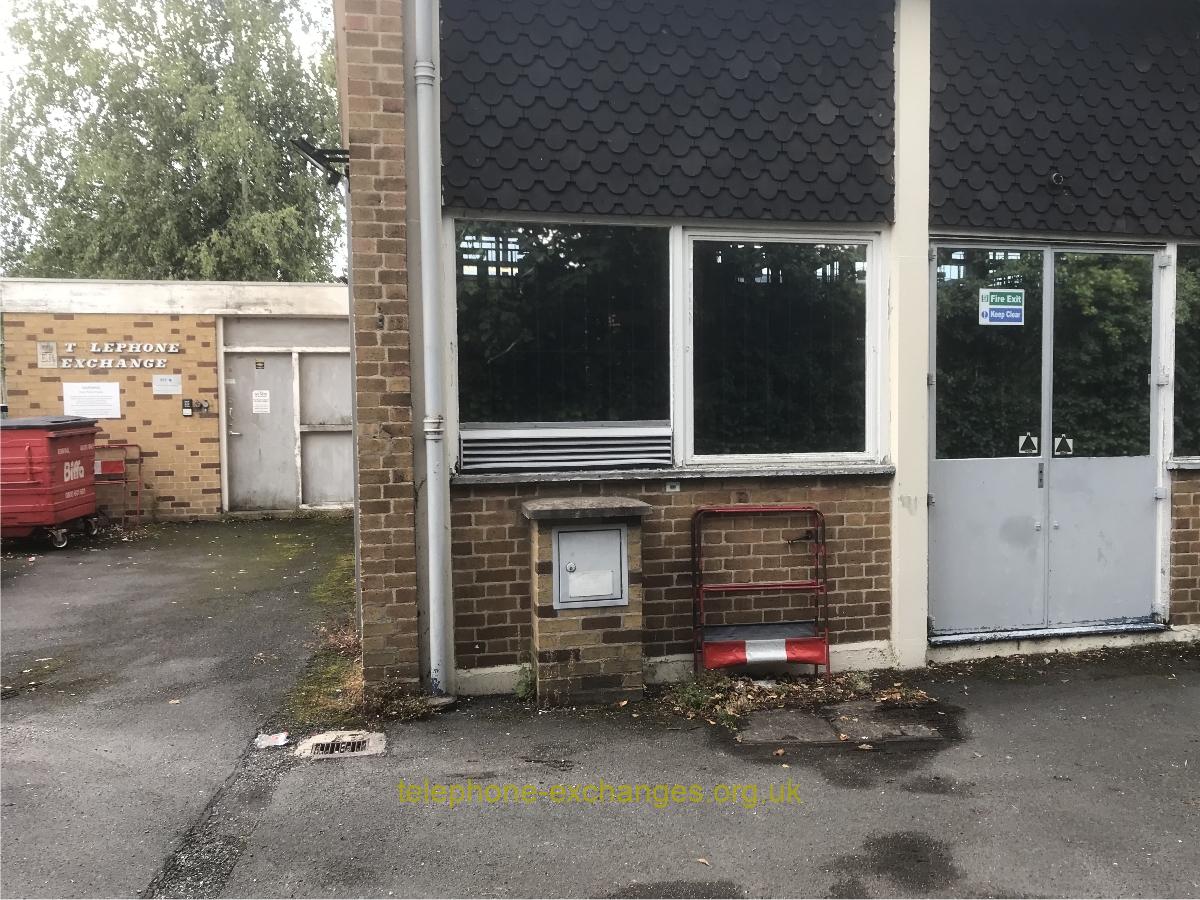
Albrighton Area Telephone Exchange is situated in Station Road, Albrighton, Wolverhampton WV7 3QG .
The exchange serves Albrighton, Boningale, Cosford and Whiston Cross.
The telephone code currently used is 01902-37.
The former dialling code was 090 722.
ID: CMALB. Photo taken by Mike Fletcher.
Albrighton former ATE

The former Albrighton exchange stood on the south west side of the current exchange site in Station Road, Albrighton, Wolverhampton WV7 3QG.
It came into service as a UAX13 in 1949 to replace a manual exchange. It closed on 22 May 1965 when it was replaced by the current exchange.
Its dialling code was 090 722.
ID: CMALB. Map courtesy of the National Library of Scotland.
Ashmore Lake former Relief Exchanges

Ashmore Lake was the name chosen for two separate relief units for Willenhall telephone exchange. The first (location unknown) was a temporary exchange which operated from 1959 to the opening of Willenhall ATE on 13 July 1961. The second was made up of three mobile units at Willenhall ATE and was in service from May 1975 until 26 July 1979 when its lines became Willenhall 63**** numbers.
The dialling code of the latter exchange was 090 725, previously used by Brewood.
Illustration from a 1976 STD code book.
Bilston ATE

Bilston Area Telephone Exchange is located in Brook St, Bilston WV14 0NS.
The telephone codes currently used are 01902-353, 01902-354, 01902-40 and 01902-49.
The former dialling code for this exchange was 0902.
ID: CMBIL. Photo taken by Mike Fletcher.
Bilston former ATE
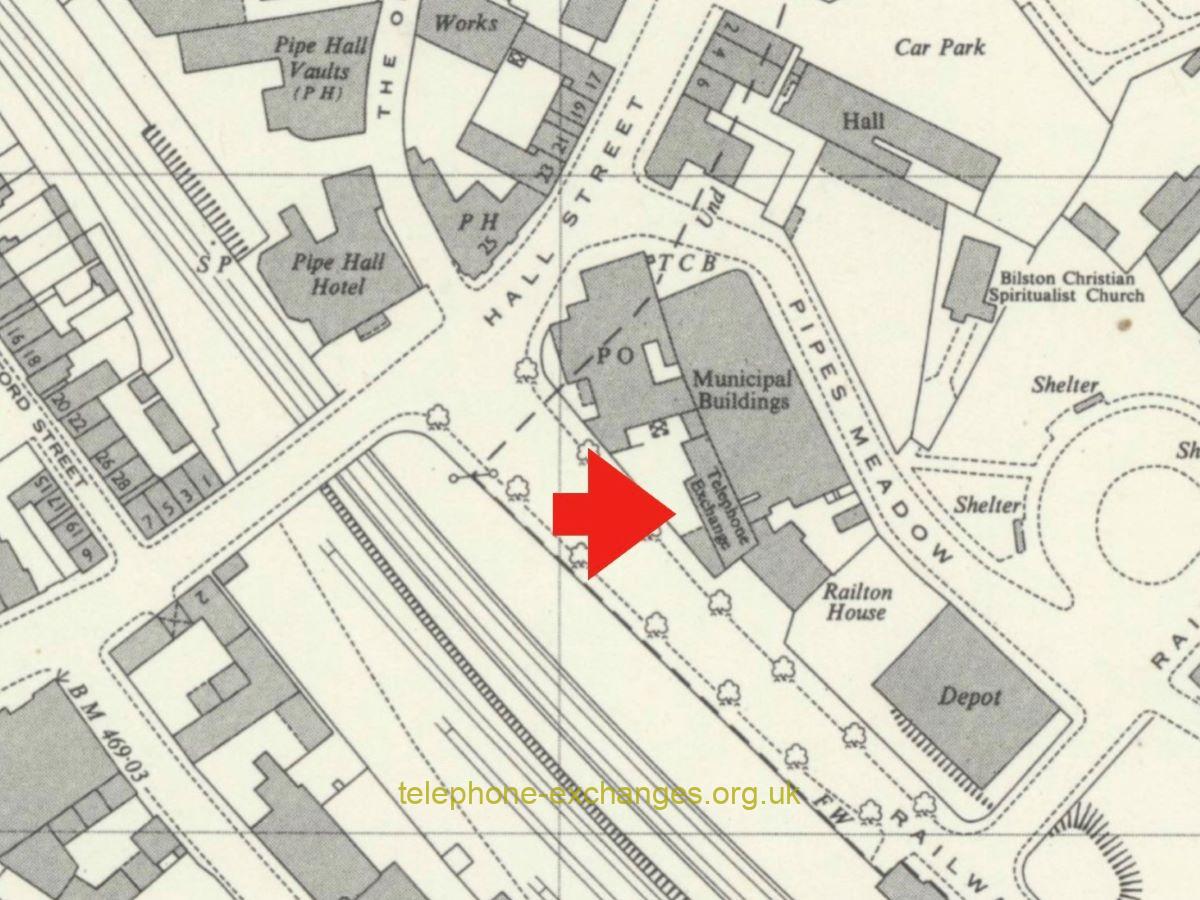
The former Bilston exchange stood behind the post office in Hall Street, Bilston, Wolverhampton WV14 0AB.
It came into service as part of the Wolverhampton linked numbering scheme in 1932. It closed on Thursday 5 August 1965 when it was replaced by the current exchange. It has since been demolished.
Map courtesy of the National Library of Scotland.
Birches Bridge former ATE

Birches Bridge was the name chosen for a temporary exchange to relieve Codsall. Its location is unknown to us.
It operated from 1959 to the opening of Codsall ATE on 19 January 1967.
Its dialling code was 090 728.
Illustration from the 1963 Wolverhampton phone book.
Brewood ATE

Brewood Area Telephone Exchange is located in Brewood, Stafford ST19 9DX. Although the exchange falls within the Stafford postal area it has the Wolverhampton STD code.
The exchange serves Brewood, Chillington, Crateford, Horsebrook, Kiddemore Green and Somerford. The telephone code currently used is 01902-85.
The former dialling code was 0902.
ID: CMBRE. Photo taken by Mike Fletcher.
Note: I have been advised that this ATE may have been recently decommissioned.
Brewood former ATE

The former Brewood telephone exchange stood in Stafford Street, Brewood, Stafford (now ST19 9DX).
It came into service as a UAX in the late 1930s. It closed in 1971 when it was replaced by the current Brewood ATE, its lines becoming Brewood 850*** numbers. A house – 10 Stafford Street – now stands on the site.
Its dialling code was 090 725.
Map courtesy of the National Library of Scotland.
Codsall ATE

Codsall Area Telephone Exchange is situated in Histons Hill, Codsall, Wolverhampton WV8 1AA.
This exchange serves Bilbrook, Codsall, Codsall Wood, Gunstone, Lane Green, Kingswood Common & Oaken.
The telephone code currently used is 01902-84.
The former dialling code was 090 74.
ID: CMCOD. Photo taken by Mike Fletcher.
Codsall former Manual Exchange

Codsall’s manual exchange was in the front room of Elmhurst, now 94 Wood Road, Codsall, Wolverhampton WV8 1DW.
It came into service on 1 January 1908 when its caretaker operators were Mrs Fanny Jones and her daughter Rose. They were succeeded in 1949 by Mr and Mrs Bert Aston who retired when the exchange closed on 19 January 1967. The new Codsall ATE took over the lines of the manual exchange and the Birches Bridge relief ATE.
Picture courtesy of Rightmove.
Eastfield former Relief ATE

Eastfield was the name chosen for a relief exchange, possibly sited at Horseley Fields exchange.
It was briefly in service from mid-1974 to cover part of the eastern area of Wolverhampton. It closed on 10 February 1975 when its lines were taken over by the newly-expanded Horseley Fields ATE as Wolverhampton 51-53*** numbers.
Its national dialling code, if any, is unknown.
Fallings Park ATE, Wednesfield

Fallings Park Area Telephone Exchange is situated in Prestwood Road, Wednesfield, Wolverhampton WV11 1RH. This exchange serves Fallings Park, Scotlands Estate, Wednesfield, Wood Hayes and surrounding areas.
The telephone codes currently used are 01902-30, 01902-72 01902-73 and 01902-86.
The former dialling code was 0902.
ID: CMFAL. Photo taken by Mike Fletcher.
Finchfield ATE

Finchfield Area Telephone Exchange is located in Castlecroft Road, Finchfield, Wolverhampton WV3 8HQ. This exchange serves Castlecroft, Finchfield, Whitewick and surrounding areas.
The telephone codes currently used are 01902-38 & 01902-76.
The former dialling code was 0902.
ID: CMFIN. Photo taken by Mike Fletcher.
Fordhouses ATE

Fordhouses Area Telephone Exchange is situated in Bee Lane, Fordhouses, Wolverhampton WV10 6LD. This exchange serves Bushbury, Fordhouses, Pendeford and surrounding areas.
The telephone codes currently used are 01902-39 & 01902-78.
The former dialling code was 090 78.
ID: CMFOR. Photo taken by Mike Fletcher.
Fordhouses former ATE

The former Fordhouses telephone exchange is in Three Tuns Lane, Oxley, Wolverhampton WV10 6BD.
It came into service as a UAX14 in late 1938 or early 1939 to replace a manual exchange. It closed when it, and the first Pendeford mobile exchange, were replaced by the current Fordhouses ATE on 21 September 1972. It is now home to the Temple Baptist Church.
Its dialling code was 090 78.
ID: CMFOR. Photo courtesy of Mike Fletcher.
Horseley Fields ATE

Horseley Fields Area Telephone Exchange is located in Union Mill Street, Horseley Fields, Wolverhampton WV1 3DW.
The telephone codes currently used are 01902-350, 01902-351, 01902-352, 01902-45 & 01902-87.
ID: CMHOR. Photo taken by Mike Fletcher.
Pattingham ATE

Pattingham Area Telephone Exchange is situated in Orchard Close, Pattingham, Wolverhampton WV6 7AN. This exchange serves Kingslow, Nurton, Pattingham, Shipley & Stanlow.
The telephone code currently used is 01902-70.
The former dialling code was 090 726.
ID: CMPAT. Photo taken by Mike Fletcher.
Pattingham former ATE

The former Pattingham exchange was in Wolverhampton Road, Pattingham, Wolverhampton WV6 7AF.
It came into service as a UAX13 in 1938 or 1939 to replace a manual exchange. It closed in late 1977 and is now an annexe to 7 Wolverhampton Road.
Its dialling code was 090 726.
Photo courtesy of Mike Fletcher.
Penn ATE

Penn Area Telephone Exchange, dating back to the 1930s, is located in Stubbs Road, Penn, Wolverhampton WV3 7DF. This exchange serves Bradmore, Penn, Penn Fields, Upper Penn and surrounding areas.
The telephone codes currently used are 01902-33, 01902-34 & 01902-62.
The former dialling code was 0902.
ID: CMPEN. Photo taken by Mike Fletcher.
Penn ATE

Penn Area Telephone Exchange is located in Stubbs Road, Penn, Wolverhampton.
This picture shows a side view of the exchange which includes the additional building at the back which has been added in later years.
Penn Telephone Exchange during World War II
At the time the writer’s father was a Chief Inspector with Wolverhampton Police Force. He heard that the Chief Constable had enrolled his daughter Ida as a GPO telephonist; a reserved occupation due to communications being of primary importance. Before I could say ‘number please’, I found that I too was sitting at a switchboard amongst dozens of other girls. We sat there for hours like a lot of battery hens. When the enemy bombers crossed the coast they were tracked and when they were reaching a specific area a ‘Red Alert’ was notified. The telephone exchange notified all the relevant authorities and the air raid sirens sounded, telling the population to take cover in the air raid shelters. I was not really happy but accepted my fate as the pay was surprisingly good and I needed to save money. I had promised my father that I would not enlist in the women’s branches of the armed forces. However, I fully intended to join the British Red Cross as a nursing member. To do this I had to be able to pay for the uniform necessary to become a mobile VAD. The uniform was expensive, the navy blue costume had to be tailor made and 14 white aprons, seven blue linen dresses and white starched caps as well as other items had to be purchased. Meanwhile, my father was happy – I lived at home and the telephone exchange was only around the corner from the police station where he worked.
Fire duty
Because of the shortage of manpower the telephonists were asked to enrol for fire watching duties. Two friends and I volunteered to go on the rota. So it came about that May, Jean and I were firewatchers at the automatic telephone exchange on Stubbs Road, Penn Fields on the night the German bombers came to Wolverhampton. The exchange was T-shaped. The part facing the road had a sloping roof and the back had a flat roof over the apparatus room. A room had been fixed up for firewatchers on the first floor. Three trestle beds with blankets were provided. The toilet facilities were a shock – we had never seen a urinal and were very grateful to find a more female-friendly facility tucked away in a corner. In the early hours there was a ‘Red Alert’ and the air raid sirens sounded. The artillery guns in Langley Road started to fire and the searchlights lit the whole sky. Whistles were blowing, dogs were barking and people were running to take shelter.
We scrambled out of the window onto the flat roof over the apparatus room and found, to our horror, two incendiary bombs burning fiercely. We had a bucket of water (which could not be used on incendiary bombs) and a small bucket of sand. It was obvious that they would burn through the roof onto the delicate communication equipment below before the fire brigade could arrive, causing disruption to any telephone communication in the Penn area. Consequently we decided to try to throw them off the roof using the long-handled shovels provided.
Fear, adrenaline and our combined strength helped us to throw them off the edge of the roof, down onto the vegetable garden where the telephone engineers had been ‘Digging for Victory’. We emptied the buckets of sand and water onto the scorched areas that remained. From the roof we could see that another incendiary had landed near to the tennis club’s pavilion next to us. We ran down the stairs and met a police constable sent by my father to see if I was all right. Helped by him we managed to deal with the tennis club bomb. He said it was thought that the bombers were trying to target the Bolton and Paul’s aircraft factory at Pendeford, where they were making the Defiant Night Fighter. In due course the regional director sent each of us a letter of thanks.
© Article courtesy of WW2 People’s War is an online archive of wartime memories contributed by members of the public and gathered by the BBC. The archive can be found at BBC WW2 Peoples War.
Pendeford former Relief ATE

Pendeford was the name chosen for a mobile exchange, used twice to relieve the Fordhouses exchanges. We don’t know where it was sited.
It was first in service from 30 July 1970 until 21 September 1972 when lines were transferred to the new Fordhouses ATE. It was then re-used for waiting subscribers until 1974 when an extension to the new Fordhouses ATE was completed.
Its national dialling code, if any, is unknown to us.
Illustration from the 1974 West Midlands Area phone book.
Sedgley ATE

Sedgley Area Telephone Exchange is located in Turls Street, Sedgley, Dudley DY3 1HH. Although the exchange falls within the Dudley postal area it has the Wolverhampton STD code. The exchange serves Coseley, Lanesfield, Sedgley, Woodsetton and surrounding areas.
The telephone codes currently used are 01902-66, 01902-67 & 01902-88.
The former dialling code was 090 73.
ID: CMSED. Photo taken in 2008 courtesy of Gordon Griffiths.
Standeford ATE

Standeford Telephone Exchange is situated in Lawn Lane, Coven, Wolverhampton WV9 5AX .This exchange serves Calf Heath, Coven, Four Ashes, Gailey and Standeford,
The telephone codes currently used are 01902-790, 01902-791 & 01902-794.
The former dialling code was 090 727.
ID: CMSFD. Photo taken by Mike Fletcher.
Standeford former ATE

The former Standeford Area Telephone Exchange is situated on the A449 just north of Standeford, Coven, Wolverhampton WV9. This exchange, which housed a UAX13, served Calf Heath, Coven, Four Ashes, Gailey and Standeford.
It is now a garage attached to a private dwelling.
The former dialling code was 090 727.
ID: CMSFD. Photo courtesy of Mike Fletcher.
Tettenhall ATE

The Tettenhall Area Telephone Exchange is located in Crowther Road, Tettenhall, Wolverhampton WV6 0JB. This exchange serves Newbridge, Tettenhall, Tettenhall Wood and surrounding areas.
The telephone codes currently used are 01902-74, 01902-75, 01902-774 & 01902-793.
The former dialling code was 0902.
ID: CMTET. Photo taken by Mike Fletcher.
Willenhall ATE

The Willenhall Area Telephone Exchange is situated in John Street, Willenhall WV13 1PJ. This exchange serves Portobello, Shepwell Green, Willenhall and surrounding areas.
The Strowger here was housed in a building to the side and rear of the Post Office in John Street in the 1960’s.
In the 1970’s a large extension was built to house a TXE4, but this never happened instead the Strowger was temporarily extended via 4 mobiles on a car park nearby and quite a few Expediency racks in the original building.
This temporary equipment was replaced in the late 1970’s by a Strowger extension in the new building ground floor. Eventually all of this was replaced in the late 1980’s by a System X Unit situated in the new first floor room that was scheduled for a TXE4.
The telephone codes currently used are 01902-36, 01902-60 & 01902-63.
The former dialling code was 0902.
ID: CMWIL. Photo taken by Mike Fletcher.
Additional information courtesy of Nigel Dutton & Col Bennett.
Wolverhampton ATE

This picture shows the original part of Wolverhampton Area Telephone Exchange which opened in 1932, it is located in Red Lion Street, within Wolverhampton City Centre.
The former dialling code was 0902.
Photo taken by Mike Fletcher.
Wolverhampton ATE
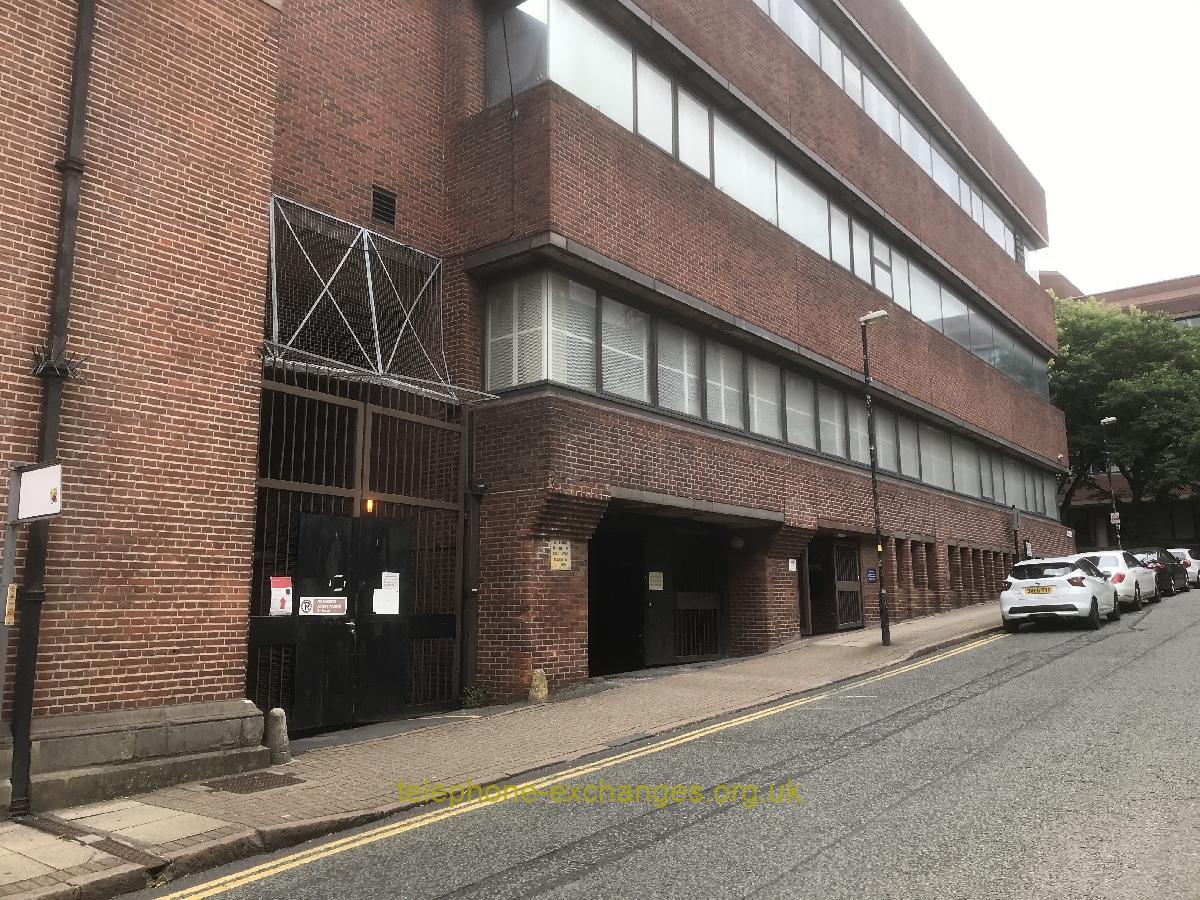
This picture shows just a little of the newer part of Wolverhampton Area Telephone Exchange, the site now occupies are large area bordered by Red Lion Street, Mitre Fold and Paternoster Row.
The telephone code currently used is 01902.
ID: CMWV. Photo taken by Mike Fletcher.
A History of Wolverhampton Telephone Exchange.
In the19th century, telephones were mainly used by businesses and wealthy individuals. The first telephone exchange in Europe opened in August 1879, soon followed by another in Manchester, both operated by The Telephone Company Limited. Around the same time the Midland Telephone Company opened an exchange in Birmingham on the corner of New Street and Stephenson Place.
In July 1880 the company installed Wolverhampton’s first telephone exchange in a room in the Free Library in Garrick Street. Making a call was a long-winded affair. In order to connect the telephone to the exchange, a white button was pressed. The operator would ask if a telephone call was about to be made, and the user would tell the operator the name and number of the person to be contacted. After making the connection, the operator waited for the person at the other end to pick-up the earpiece, and then told the caller to proceed. When the telephone call had ended, the caller had to inform the operator, who would then remove the connection. Although this was time consuming, there were very few users, and so it worked adequately.
The first telephone line in Wolverhampton, about a mile long, was laid between Moses Ironmonger’s rope and twine factory at 272 Brickkiln Street, and the company’s office in High Street. Moses Ironmonger, the Chief Magistrate of Wolverhampton, and Mayor in 1857 to 58, and again in 1868 to 69, was also president of the Wolverhampton Chamber of Commerce in 1873 to 74, and a friend of Alexander Graham Bell, the telephone pioneer. Ironmonger’s telephone line was tried out by some of the local councillors, who appear to have been impressed.
Before the end of July 1880 Monmore Green and Ettingshall were connected to the exchange. By October between 50 and 60 calls were made daily. Wolverhampton’s next exchange was set up in 1903 in a large house next to the Town Hall, where the Civic Centre is today. The house had previously been occupied by John Freer Proud, a surgeon. As the number of users increased, the old manual telephone exchanges could no longer cope and so automatic exchanges were developed.
In Wolverhampton a large automatic exchange opened on the 29th September, 1932 in Red Lion Street, on the corner of Mitre Fold.
© Written by Bev Parker and quoted with kind permission from the excellent Wolverhampton History & Heritage website.
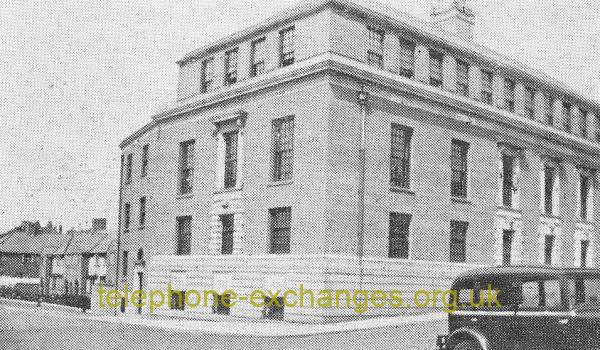


West Park former ATE

The former West Park telephone exchange was in Devon Road (sided by New Hampton Road East & Park Road East), Wolverhampton WV1 4BE.
It came into service around 1974 in a converted drill hall as a ‘temporary satellite’ exchange to relieve Wolverhampton ATE, with a 4-digit auto exchange and auto manual board. It closed on 11 January 1979, its 400 lines being transferred to Wolverhampton. Most of the drill hall complex had been demolished for housing.
Its dialling code was 090 723.
Photo (2014) courtesy of John M.
Wombourne ATE

Wombourne ATE is located in Church Road, Wombourne, Wolverhampton WV5 9EZ
The telephone codes currently used are 01902-324, 01902-326 & 01902-89 .
The former dialling code was 090 77.
ID: CMWOM. Photo taken by Mike Fletcher.
Wombourne former ATE

The former Wombourne exchange was situated in Gravel Hill, Wombourne, Wolverhampton WV9 9HA.
The first exchange here was a UAX7, opened at 9.30am on 26 March 1935. It replaced a manual exchange opened on 13 July 1923, the area having previously been covered in part by Sedgley exchange. After closure, it was demolished to provide access to the Maypole Court housing development.
Its dialling code was 090 77.
Map courtesy of the National Library of Scotland.
Other former Wolverhampton Relief Exchanges
- St Chads Former Relief ExchangeSt Chad’s was the name chosen for a mobile relief unit for Pattingham exchange. although its location is unknown to us. It came into service in 1975 and closed in late 1977 when lines were transferred to the new Pattingham exchange as Pattingham 700*** numbers. Its dialling code was 090 727.