


Use the drop-down numerical list to find your local STD Telephone Area code:

Website progress statistics as of 31 August 2026
After four years phase one of our project has now been completed
Number of
current exchanges
Number of
former exchanges
Total number
of exchanges
Total number of
exchange photos
Total number of
exchange groups
5629
2078
7021
633
Now all we need are your photos for around 700 exchanges without a picture
Introduction – updated February 2026
Having launched in February 2022 the Telephone Exchanges website is now celebrating it’s fourth anniversary. The website is an off-shoot of my well established Telephones UK website which was first published in February 2002 and is now over twenty years old. This new Telephone Exchanges website is also built on a WordPress platform offering a fresh new mobile friendly style, higher quality images and with SSL security.
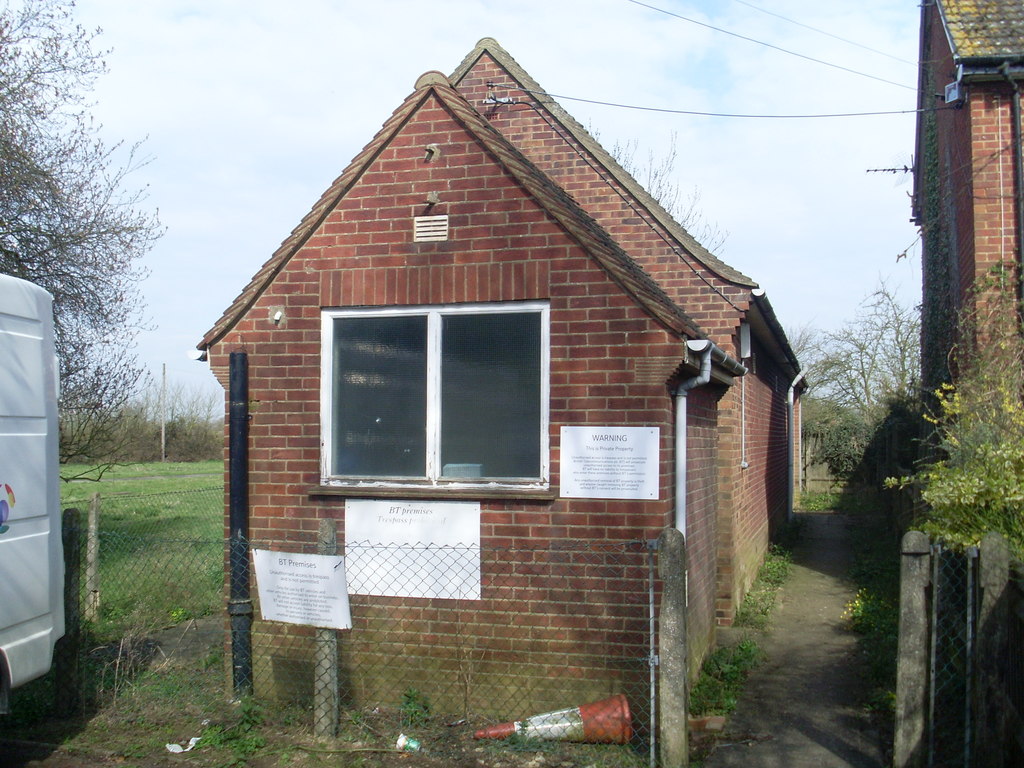
The site consists of pages containing photographs and information on telephone exchanges within the UK. I appreciate all the invaluable help and support from many contributors. I am particularly indebted to David Hillas, Simon Cowper-Smith, John Cranston, Ian Duffy, Denver Whiting, Lisa Kinch, Damon Wilkinson, Jaggery, Neil White, Tony Willgoose, Craig Gonsalves, John Howard, Peter Laird, Peter Barrington, David Edge, Toby Lucas, Ian Richardson, Alex Presland, Jake Thomas, David Jones, Chris Millar, Sean Downey, Brian Stalker, Jon Dorking, Andy Hebden, Ashley Brown, Andrew Holland, Andrew Young, Andy Chambers, Anthony Smart, Clive A, Geoff Prytherch, George Smith, John Howard, John Youles, Will Blethyn, Tony Willgoose, Richard Stephens and Richard Haydon. Not forgetting the names I have omitted! Another great source of exchange photographs that I have included is from the Martin Loach Collection, which includes photographs taken by Martin Loach & associates. My thanks and appreciation go to all the folk that have kindly contributed to the site.
As there are approximately 630 exchange groups (areas) within the UK, which include around 5600 BT/Openreach telephone exchanges, of which around 4000 are in England, the remaining being in Scotland, Wales and Northern Ireland. Then, of course, there are many hundred former exchange buildings still in existence. Therefore this is going to be very much a long term project. However, as the UK telephone infrastructure is rapidly being converted over to Voice over IP technology and the infrastructure being changed from copper cable to fibre optic, many of these exchange buildings will become surplus to requirements and become defunct. In December 2020 Openreach launched a consultation on plans to close 4600 exchanges in the UK. I therefore feel that it is important that these buildings; from the ones that resemble a large shed, to a large Edwardian building, that is full of character, are all remembered.
The individual dialling code(s) given for each telephone exchange are based on the codes in use in the 1990s and are not always reflective of the dialling codes currently in use today. The former dialling codes are based on the codes in use, typically in the 1960’s, 1970’s and 1980’s.
In the past year, with the terrific assistance from my wonderful contributors, we now have covered all the exchange groups, including listing all the BT telephone exchanges, in the whole of England, Scotland, Wales and Northern Ireland.
We have so far achieved great success for the exchange groups that we have added with an average of 80% of photos for these groups. However, we are still on the lookout for missing photographs for those groups, as well as for groups not yet added so please get in touch if you can assist.
If you are connected to this site via a slow connection then please be patient as some pages contain a lot of large images. Click on an image to view a full screen picture. The site is still being added to, as I have the time. If anyone has any pictures or information on telephone exchanges in the UK that I can use or if you notice any errors please let us know.
This page updated by Mike Fletcher on 1 February 2026
The final call for the traditional telephone exchange
For more than a century the telephone exchange has formed the backbone of our telecommunications system. A vast array of more than 5,500 mostly nondescript buildings sit unnoticed on city, town or village streets, and quietly link up more than 254 million kilometres of cables and wires – keeping people in the UK connected to each other and the rest of the world.
Since the first telephone exchange was established in London in 1879 with just eight subscribers, these anonymous looking buildings have spread the length and breadth of the UK – from the smallest on the remote Shetland Isle of Papa Stour, with just 14 homes, to the largest in Oldham, Manchester, serving more than 45,000.
But the recent explosive growth in new digital fibre based services means the majority of these iconic communication hubs will soon route their last ever call.
The advent of tiny but powerful microprocessors and glass fibres, thinner than the width of a human hair, only need a tiny fraction of the space taken up by miles of copper wires and bulky racks of switching machinery to run the old copper based phone network or Public Switched Telephone Network (PSTN).
This seismic shift means that today we’re able to provide fibre broadband services to the entire country from just 1,000 ‘super digital exchanges’ or Openreach Handover Points (OHPs).
Sadly, this spells the beginning of the end for the remaining 4,600 exchanges used to support traditional copper based phone and broadband voice services. And these copper customers are dwindling fast as people migrate to faster more efficient fibre
Openreach is now consulting with its communication provider (CP) customers – like Sky, Vodafone, TalkTalk and BT, who use our network to connect their own customers – about how to close these ‘legacy’ exchanges over the next decade or so.
This will be a major undertaking with several million services to be migrated, and the importance of ensuring vulnerable customers and the UK’s Critical National Infrastructure providers are protected along the way. So we’re planning it in stages – with the first 103 exchanges to close by December 2030. These have some of the highest running costs so there’s a clear advantage in targeting them first. Most of the remaining 4,500 exchanges will likely follow in the early 2030s.
Press release by Richard Allwood, Chief Stragey Officer, Openreach – 26 June 2023.
Points to note
- The dialling (telephone) codes stated for each exchange are typically the dialling codes in use in 1996 and may not always reflect codes currently used these days.
- The dialling codes listed are only for BT subscribers, there are many other codes in use for other carriers and providers, which have grown exponentially in later years.
- The former dialling codes typically state the codes in use in the 1960’s, 1970’s and 1980’s. However, over the decades dialling codes for a particular exchange will often have changed numerous times. In addition, subscribers used to have short local codes to use for making calls to subscribers in neighbouring exchanges instead of using the full STD code. Some exchanges are also part of a linked numbering scheme.
- STD codes have also changed over the year, the most prominent dates being: 1966 All-figure numbering, 1990 new London codes, 1995 PhONEday – an extra 1 added to codes, 2000 Big Number - change of STD codes for a number of areas. There have also been many other instances when an STD code has been changed.
- To differentiate between automatic and manual exchanges we have used the abbreviation ATE to signify an Automatic Telephone Exchange. However, the abbreviation TE for Telephone Exchange is more commonly used to describe a telephone exchange, with ATE typically describing larger exchanges.
- We have endeavoured to ensure that the information provided is as accurate as possible. However, errors will invariably occur, please bring to our attention any information you wish to correct.
Why not call the Telephones UK Speaking Clock services on 0871 976 2819 & 0871 976 2839

Telephones UK has its own popular Speaking Clock Service which features the authentic voice of Pat Simmons.
The number to directly access the Speaking Clock is 0871 976 2819, if dialling from abroad the number is +44 871 976 2819.
We also have a second Speaking Clock line on a separate number 0871 976 2839 which features a variety of speaking clock voices from the past, please see the Speaking Clock page for further details.
Calls to our Speaking Clock services remain the same, the cost is 13p per minute, plus VAT, plus your phone company’s access charge.
When dialled the clock will speak for a set period of time, typically between 40 and 60 seconds, you can hang up before this time, but the line may remain engaged until the time has elapsed.
Our Speaking Clock is radio controlled by the MSF Radio Time Signal in Anthorn, Cumbria to enable it to remain accurate at all times. We aim to provide a reliable service, should you experience persistent problems, please contact us via our feedback page. Our clock has no connection with the genuine BT Speaking Clock service nor with the THG.
During periods of high demand callers may receive either engaged tone or ringing tone when the speaking clock equipment is in use. If this occurs then please redial again, a short while later.
Information on the history of the BT Speaking Clock is now available on our Speaking Clock page.
Telecommunications Heritage Group

I have been a proud member of the Telecommunications Heritage Group since 2002. The THG was formed in 1986 with the aim of bringing together all those engaged in the study, preservation, and collection of the heritage of communications. It now has over 450 members worldwide. The THG is a club or society, not a trading organisation, and they cater for researchers, collectors, historians, operators of restored apparatus and all people just interested in the subject for its own delight.
Interests covered by the Telecommunications Heritage Group (UK) include old telephones, telegraphs, phone kiosks and other hardware. Included in the very reasonable membership fee is a high quality quarterly journal. The complete heritage of telecommunications – civil, military, transport, public, private, ancient and modern, British and foreign – is studied across the membership. A number of members offer help on particular subjects such as kiosk restoration and railway telecommunications. Some enthusiasts own restored vehicles or telephone kiosks, whilst others are responsible for running complete multi-exchange telephone systems on preserved railways, using vintage telephone equipment. Quite a few museums and preservation bodies have close links with the group. For further information about the group and details on how to join please visit the official THG web site at: www.thg.org.uk.
Important note: This website is not endorsed by or associated with the Telecommunications Heritage Group, British Telecom or Openreach, in any manner.