

The seventeen BT Telephone Exchanges (and eighteen former) in the Coventry (024) telephone area
Before 1982 the STD code for the Nuneaton exchanges was 0682, which then changed to the 0203 Coventry code.
The code 0203 for Coventry was then changed to 01203 on PHONEday in April 1995.
The last number change was in April 2000 when Coventry numbers changed from 01203 xxxxxx to 024 76xx xxxx.
The codes 024 -75 and 024-77 have also been introduced in latter years.
Allesley ATE

Bedworth ATE

Bedworth former ATE

The former Bedworth exchange was in Spitalfields, Bedworth CV12 8HU and covered Bedworth, Exhall and Bulkington.
It came into service on 2 November 1939 as a UAX14 to replace a manual exchange in Leicester Street.
After it was replaced by the current exchange on the same site, a relief unit called Chamberlaine was in use between August 1973 and 27 September 1973.
The dialling code for Bedworth was 068 289.
Map (1950) courtesy of the National Library of Scotland.
Binley ATE

ID: CMBIN. Photo courtesy of Randall Smedley.
Bondgate former Relief ATE
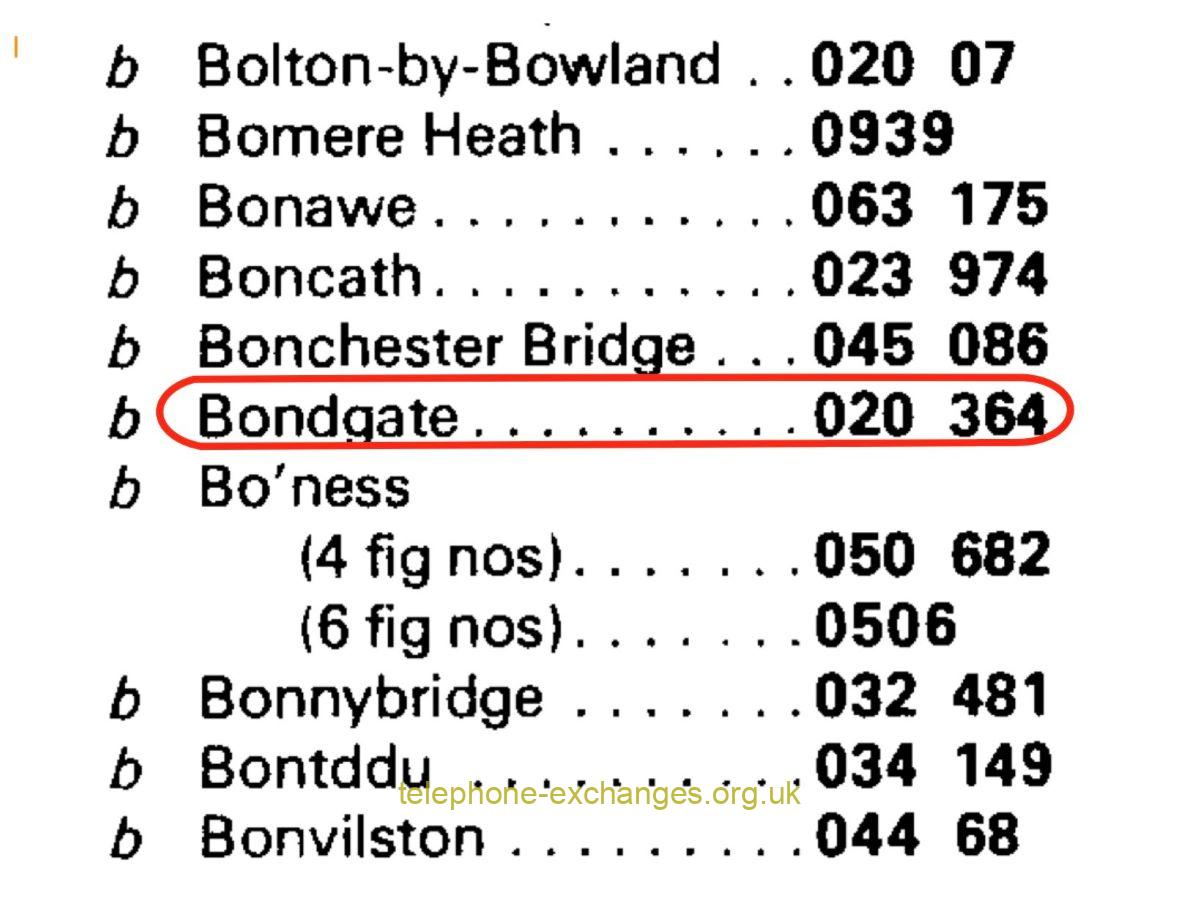
Bondgate was the name chosen for a relief unit to Nuneaton exchange.
It is believed to have been sited at or near to the current exchange.
It came into service around December 1980 and closed on 5 May 1983.
Its dialling code was 020 364.
Illustration from the 1979 Ryde STD code book.
Chapel End ATE

Chapel End former ATE

The former Chapel End exchange was at (what is now) 75 Victoria Road, Hartshill, Nuneaton CV10 0LS.
It came into service in November 1938 as a UAX13. It was replaced by the current exchange which opened on 2 July 1971.
It has been demolished and replaced by a house.
Its dialling code was 068 289.
Map (1947) courtesy of the National Library of Scotland.
Cheylesmore ATE

ID: CMCHEY. Photo by Mike Fletcher.
Coventry ATE

ID: CMCGF. Photo courtesy of David Hillas.
Coventry former ATE

The former Coventry automatic exchange stands to the rear of the former post office (seen here) in Hertford Street, Coventry CV1 1LA.
It came into service on Saturday 20 November 1926, in a linked numbering scheme with the former Foleshill exchange. Initially equipped by the Coventry-based Peel Connor company, it replaced a manual exchange at 17 Smithson Street. It was replaced by the current exchange which opened on 6 February 1960, although it may have then housed the temporary Stoke exchange. The former exchange section of the building, fronts Greyfriars Street. Both it and the former post office are now the Pillar Box student accommodation.
Photo (2015) courtesy of E Gammie.
Earlsdon ATE

Earlsdon telephone exchange is located in Winifred Avenue, Earlsdon, Coventry CV5 6JS.
The telephone codes for this exchange include 024-7667, 024-76691, 024-7671, 024-76854 and 024-7687.
The former dialling code for this exchange was 0203.
ID: CMEARD. Photo courtesy of Ian Halsey.
Exhall ATE

Exhall Telephone Exchange is located in School Lane, Exhall, Coventry CV7 9GG.
The telephone codes for this exchange include 024-7636, 024-76644 and 024-76645.
The former dialling code for this exchange was 0203.
ID: CNEXH. Photo courtesy of Mike Fletcher.
Exhall former Relief ATE
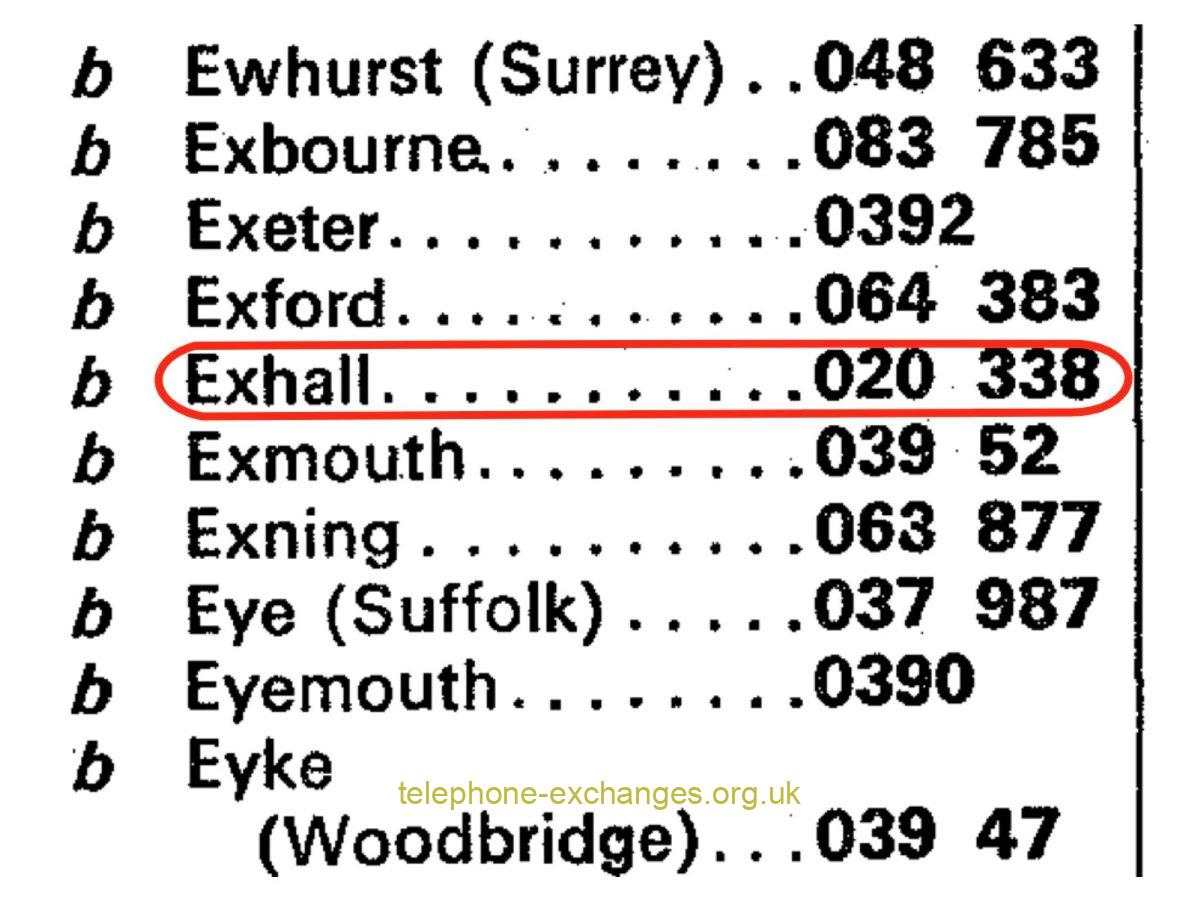
Exhall was the name given to a mobile relief exchange, possibly sited at School Lane, Exhall, Coventry CV7 9GG. It opened in 1976 to provide a service while the permanent Exhall exchange was being built.
It closed on 14 December 1978 when the current exchange opened, taking lines from the mobile unit, Bedworth and Foleshill exchanges. All became Coventry 36**** numbers.
Its dialling code was 020 338.
Illustration from the 1976 Tunbridge Wells STD code book.
Foleshill ATE

ID: CMFOL. Photo by Mike Fletcher.
Foleshill former ATE

The former Foleshill exchange is at 16 Fisher Road, Coventry CV5 5HW.
It came into service on Saturday 20 November 1926, as part of a linked numbering scheme, lines being allotted Coventry 8*** numbers.
It was replaced by the current Foleshill exchange which opened at 7.30am on Thursday 27 July 1961.
It is now the Maharishi Valmiki Temple.
ID: CMFOL. Photo courtesy of Kevan Baker.
Gibbet Hill former ATE

The former Gibbet Hill exchange is at 106 Kenpas Highway, Coventry CV3 6BQ.
It came into service on 2 April 1932 as part of a linked numbering scheme, lines being allotted Coventry 67*** numbers. It closed, along with the Green Lane relief exchange, when the Highway exchange opened on 18 June 1970.
It is now believed to be a private house.
Its dialling code was 0203.
Photo courtesy of Kevan Baker.
Great Heath former Relief ATE

Great Heath was the name chosen for two separate relief units to Foleshill exchange.
The first was in service between 15 February 1973 and 20 August 1974. Its dialling code is believed to have been 020 353. The second was housed in two mobile units at Foleshill exchange and was open between 1 April 1980 and 15 April 1982.
Its dialling code was 020 360.
Illustration from the Ryde STD code book, 1979.
Green Lane former Relief ATE

Green Lane was the name chosen for a 400-line mobile relief unit in the Gibbet Hill area of Coventry although its exact location is unknown to us.
It came into service at 9am on 31 October 1966 and closed, along with the former Gibbet Hill exchange, when the Highway exchange opened on 18 June 1970.
Its dialling code was 020 336.
Illustration from the London STD code book, 1968.
Greyfriars former Manual Exchange

Greyfriars was a relief manual exchange serving central Coventry, possibly located in Greyfriars Street. It was opened in February 1953 with an initial capacity of 490 residential lines but grew to serve more than 1400 lines. Around 800 lines were transferred to Stoke and Earlsdon exchanges when they opened on 9 July 1958. Greyfriars manual exchange closed on 29 January 1959 when remaining lines went to the former Coventry ATE.
Illustration from the 1957 Coventry directory.
Highway ATE

ID: CMHIGW. Photo by Mike Fletcher.
Keresley ATE

Keresley former ATE

The former Keresley exchange stood in Tamworth Road, Keresley, Coventry (now CV6 2EL).
The first auto exchange here opened as an RAX5 on 25 November 1930. It was later replaced by a UAX13.
It has been demolished and 16 Tamworth Road roughly occupies the site.
Map (1950) courtesy of the National Library of Scotland.
Nuneaton ATE
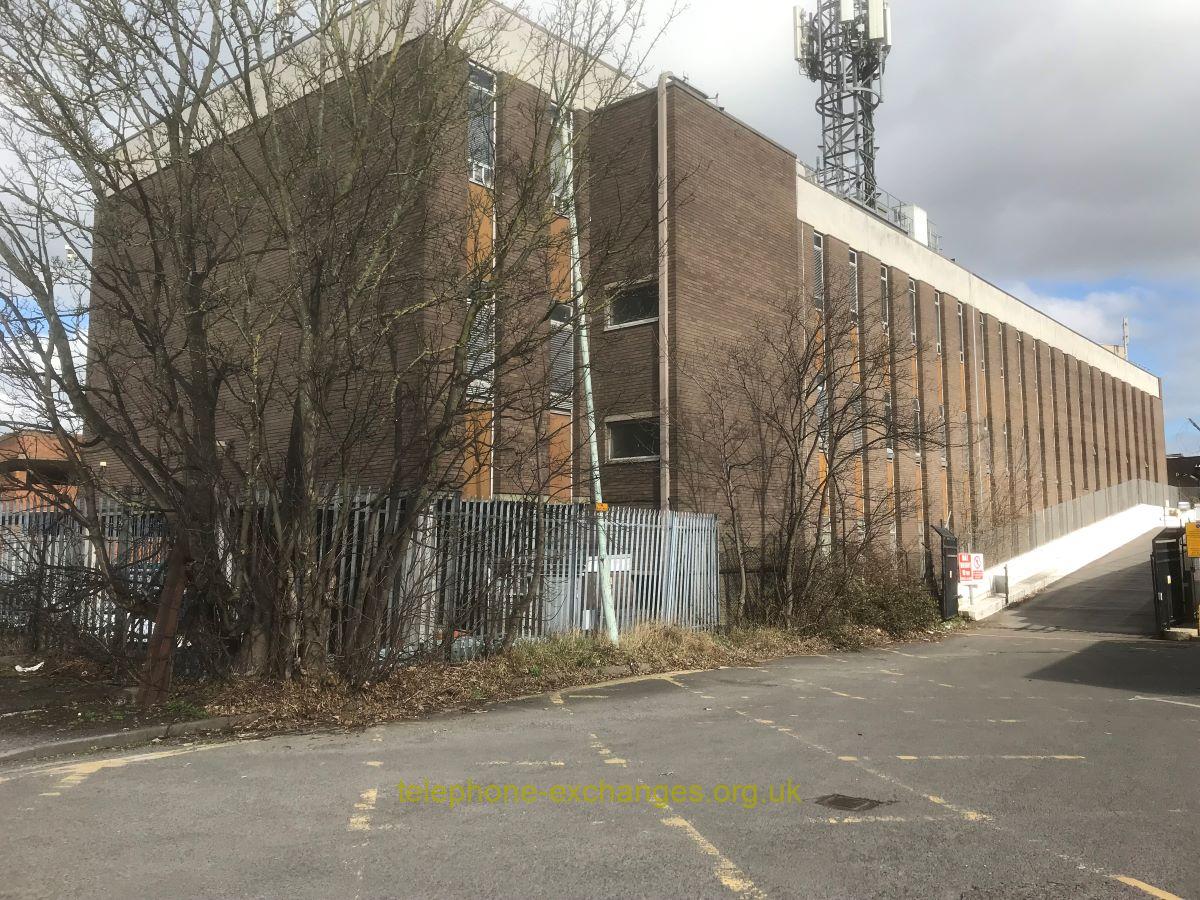
ID: CMNUN. Photo courtesy of Mike Fletcher.
Nuneaton former ATE

The first automatic Nuneaton Telephone Exchange fronts onto Harefield Road, Nuneaton CV11 4HH.
Built before the Second World War, it didn’t come into service until 1 June 1944 as a non-director exchange, replacing a manual exchange at the post office. The current exchange was later built to its rear.
ID: CMNUN. Photo courtesy of David Edge.
Nuneaton former Manual Exchange 3

The last Nuneaton manual telephone exchange was on the first floor of the town’s main post office, seen here on the right, in Bridge Street, Nuneaton.
It came into service in October 1923 to replace an earlier exchange in Church Street. It closed at automation on 1 June 1944.
The post office has since been demolished and replaced by shops.
Photo courtesy of Nuneaton Heritage Centre.
Nuneaton former Manual Exchange 2

The second Nuneaton manual telephone exchange was at 7 Church Street (the white-fronted terraced house) in Nuneaton (now CV11 4DS).
It was opened by the National Telephone Company to replace an earlier exchange in Wash Lane (later Queen’s Road). It closed when lines were moved to a new exchange at the post office. It has since been demolished and Powell House stands on the site.
Photo courtesy of Our Warwickshire website and Keith Draper.
Radford ATE

Stoke former ATE

The location of the former Stoke exchange is not known to us.
It came into service on 9 July 1958, taking around 1650 lines from Coventry exchange and 350 from the Greyfriars relief manual. All became Coventry 5**** numbers. At that stage it was housed temporarily in Hertford Street, probably in the post office/Coventry exchange buildings.
Stoke exchange closed on 13 January 1972 when Binley exchange opened.
Photo required.
Tile Hill ATE

Tile Hill former ATE

The former Tile Hill exchange is in Tile Hill Lane, Tile Hill, Coventry CV4 9GD.
It came into service on 6 September 1931 as part of the Coventry linked numbering scheme. The name Tile Hill was dropped when it was replaced by the current exchange, which stands beside it, around 1970.
Its former dialling code was 0203.
ID: CMTIL. Photo courtesy of Mike Faherty.
Toll Bar ATE

Toll Bar former ATE

The former Toll Bar exchange was in Rowley Lane, Tollbar End, Coventry.
It came into service on 21 October 1948, taking lines from Coventry and Wolston.
It was replaced around 1970 when lines became Coventry numbers. The site is now part of a business park.
Its dialling code was 020 331.
Map (1961) courtesy of the National Library of Scotland.
Walsgrave on Sowe ATE

Wolston ATE
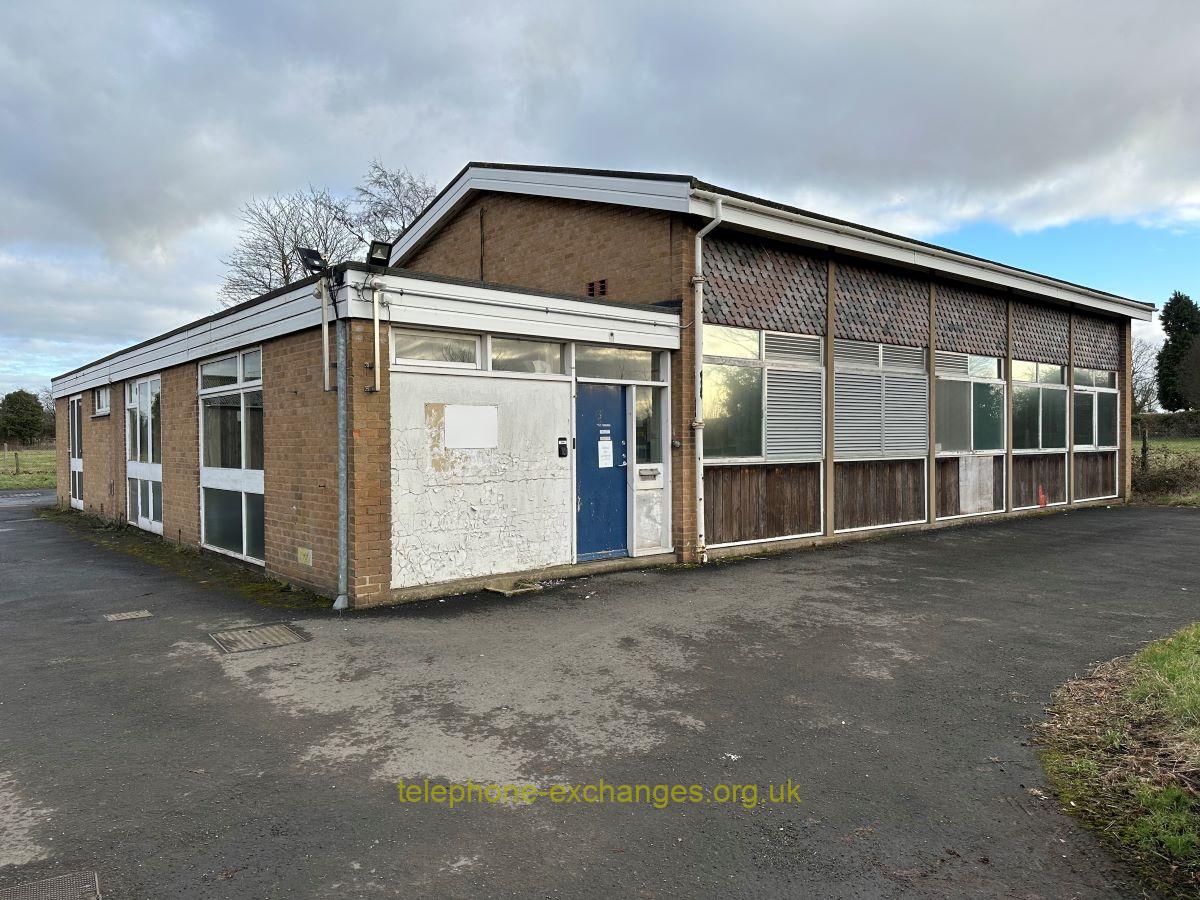
Wolston former ATE
